This is the definitions post. If you want the field-decision version — how to tell Condition 2 from Condition 3 while you are standing in the room, and what changes in your scope when you do — read Condition 2 vs Condition 3 on the job instead. What follows is the classification itself: what each Condition means, what it looks like in real buildings, and how the three of them structure every remediation decision you make.
What are the S520 mold Conditions?
The ANSI/IICRC S520 sorts every indoor environment into one of three Conditions: Condition 1 is normal fungal ecology, Condition 2 is settled spores and fragments without actual growth, and Condition 3 is active or former growth on a surface. The Condition is a description of what is present in a defined area, not a severity score for the whole building.
That last part trips people up. A single house can hold all three at once — Condition 3 under the sink, Condition 2 in the room the air handler pushed spores into, Condition 1 in the bedrooms at the far end. You classify per area, you scope per area, and you verify per area. The S520 overview covers where the classification sits inside the rest of the standard.
Everything downstream keys off it. Containment type, PPE, whether a material gets cleaned or removed, what the independent indoor environmental professional (IEP) looks for at clearance — all of it follows from the Condition you assigned at the start. Get the classification wrong and every decision after it inherits the error.
What does Condition 1 actually mean?
Condition 1 means normal fungal ecology: the fungal types and amounts present are what you would expect in that building, in that climate, in that season, with no growth and no settled contamination from a nearby source. It is the baseline a healthy building sits at and the endpoint every remediation project is trying to return an area to.
What Condition 1 looks like on a walkthrough:
- No visible growth on any surface, including the back sides of accessible materials.
- No musty odour that follows you around the space.
- No moisture readings above the dry standard for the assemblies in that area.
- No history of unaddressed water intrusion in the area you are classifying.
Note that Condition 1 is not "sterile" and it is not "zero spores." Ordinary indoor air always carries fungal spores that blew in from outside on shoes, pets and open doors. A remediator who promises a spore-free building is promising something no building has ever had. What you are restoring is normalcy relative to the outdoors and to the rest of the structure.
What does Condition 2 look like in a real building?
Condition 2 is settled spores and fungal fragments in an area with no growth of its own — contamination that arrived from somewhere else. The classic example is the room next to the leak: nothing grew in it, but demolition, foot traffic or an HVAC return moved spores into it and they settled on horizontal surfaces.
Field examples you will actually run into:
- A hallway and two bedrooms downwind of an unconstrained bathroom demolition — dust on the door casings, nothing growing.
- The supply side of a duct run that pulled from a Condition 3 mechanical closet. See HVAC mold contamination for how far that travels.
- Contents stored in a room adjacent to a long-term crawlspace problem — boxes, upholstery, the tops of bookshelves.
- A finished basement where the growth is confined to one wall cavity but the whole floor reads dusty under a good light.
Condition 2 areas are usually cleaned rather than demolished: HEPA vacuuming, damp wiping, contents handling, and controlling the pathway that let the spores travel in the first place. If you cannot say where the contamination came from, you have probably not found the Condition 3 area yet.
What does Condition 3 look like in a real building?
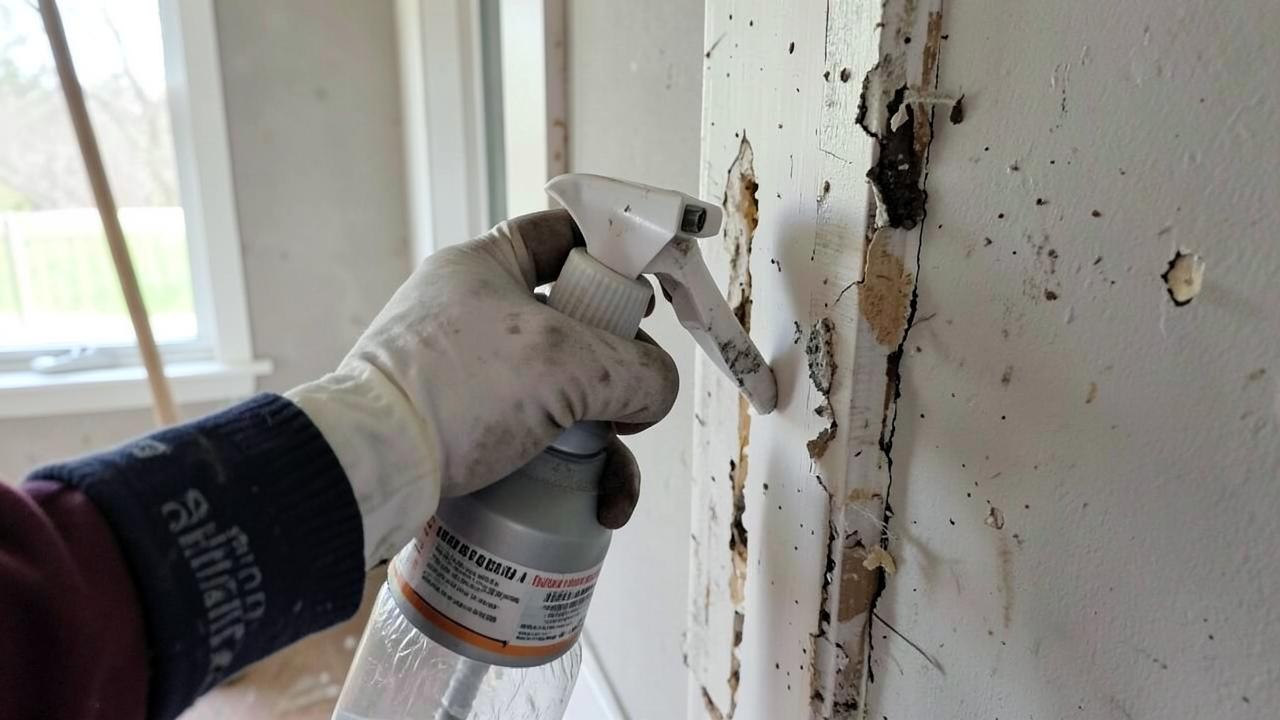
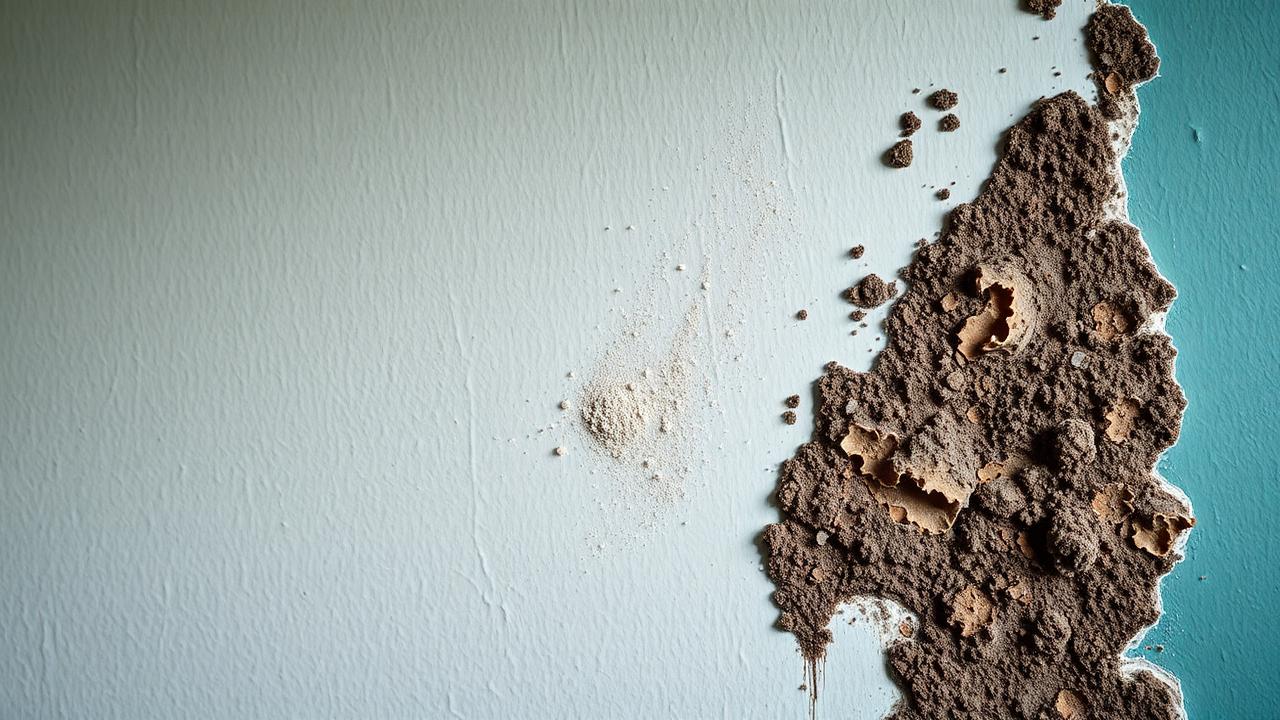
Condition 3 means actual mold growth — active or former — on a surface in the area. Former counts: dried-out growth on the back of a baseboard from a leak fixed two years ago is still Condition 3, because dead fungal material is still an allergen and still needs to come out.
Field examples:
- Drywall paper with the classic dark bloom above a supply line.
- Roof sheathing with staining across the north slope — see attic mold remediation.
- Joists and subfloor in a vented crawlspace with a bare dirt floor — crawlspace remediation covers that whole category.
- The underside of vinyl flooring lifted off a slab that never had a vapour retarder.
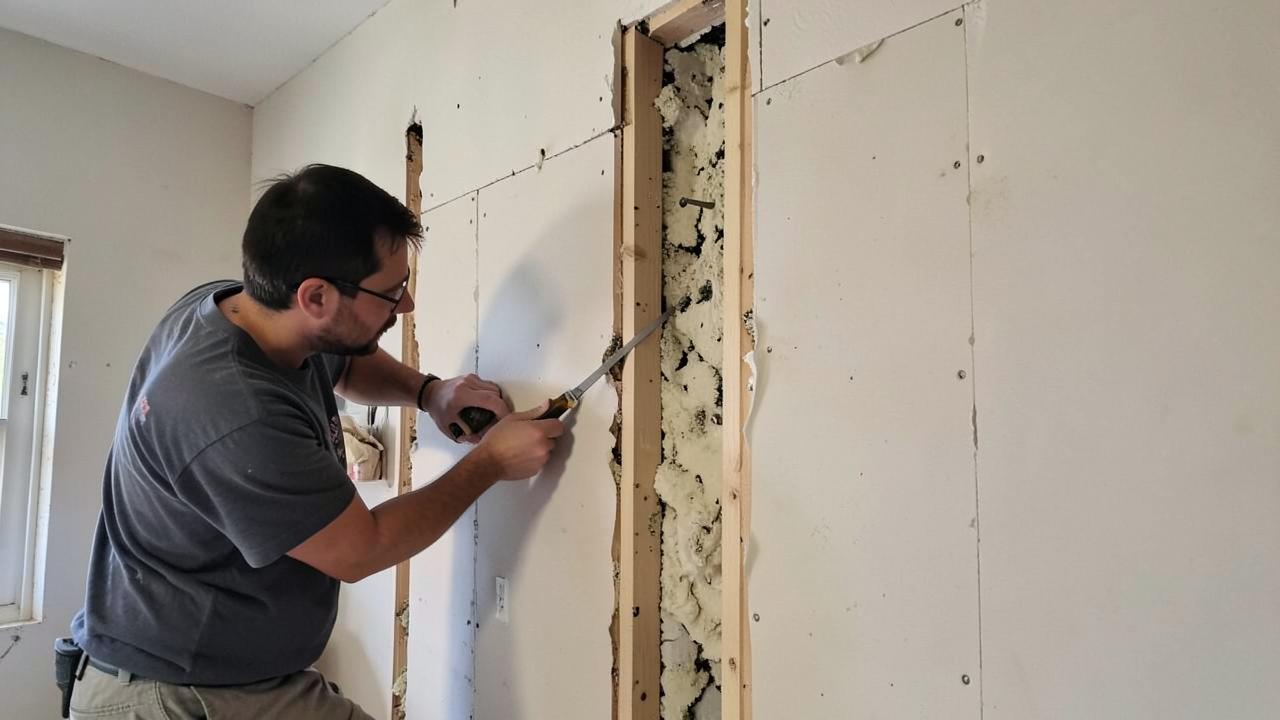
The remediation principle in Condition 3 is removal of the contamination and, where it is porous and colonised, removal of the material itself. Cleaning a colonised porous surface leaves hyphae inside the material where a rag cannot reach, which is why the standard leans on physical removal rather than chemical treatment.
How do you assign a Condition without guessing?
Define the area first, then classify it, then write it down. An "area" is a space you can treat as one unit — a room, a cavity, a crawl, a duct run. Vague boundaries are what produce vague scopes and arguments at clearance.
Working sequence:
- Find and confirm the moisture source. Growth without a water story means you have missed something.
- Map moisture with meters and, where it helps, thermal imaging — finding hidden mold walks through the technique.
- Inspect visually, including behind and under materials, before you commit to a Condition.
- Draw the area boundary on the sketch and label it 1, 2 or 3.
- Photograph what justified the label. The photo is what defends the classification months later — see remediation documentation.
On larger or occupant-sensitive jobs the classification and the written protocol commonly come from an independent IEP, and the remediator works to that protocol. Knowing where their document ends and your scope of work begins keeps both of you out of trouble.
How do Conditions change the work you do?
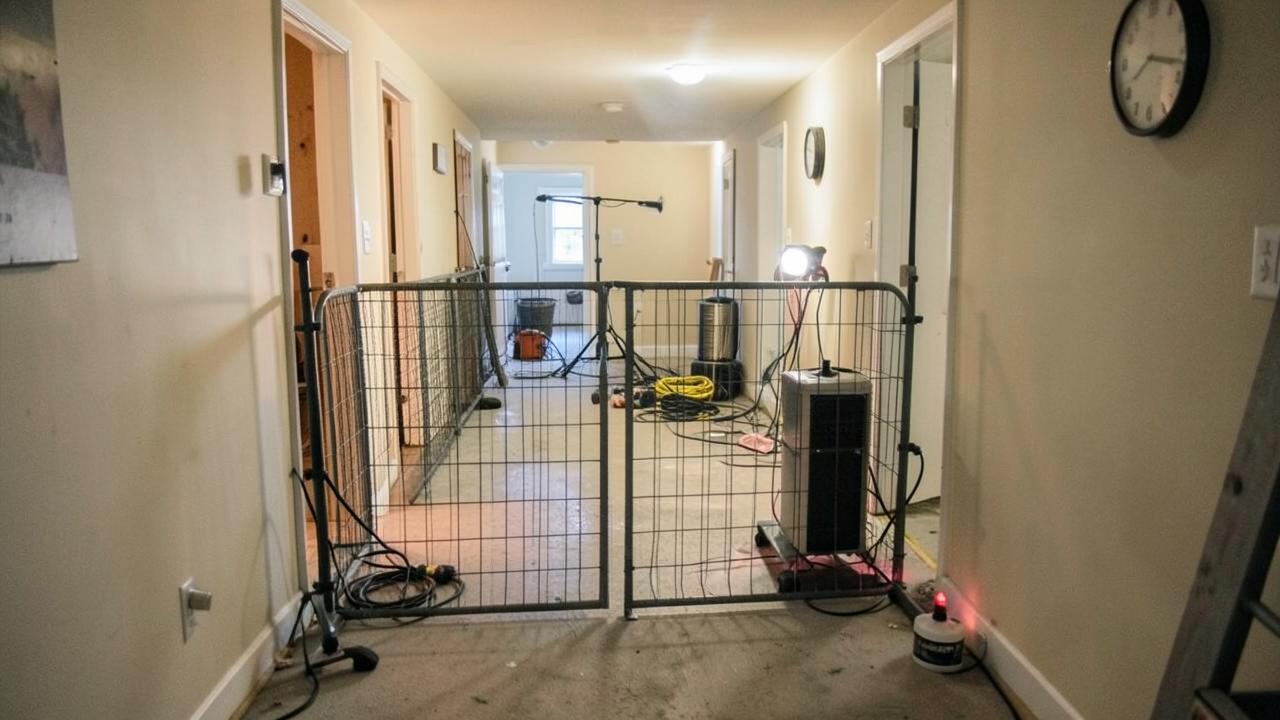
Condition drives containment, PPE, method and verification, in that order. Condition 3 areas commonly get engineering controls and physical removal; Condition 2 areas commonly get cleaning and pathway control; Condition 1 areas get left alone and protected.
Filtration is sized to the containment you build, not to the Condition number — run the room volume and machine CFM through the air changes per hour calculator once the barrier is drawn. PPE scales with both the Condition and the method: cutting drywall out of a Condition 3 bathroom generates far more aerosol than wiping a Condition 2 shelf, and the PPE guide covers how that selection is made.
Why does the AMRT exam lean so hard on Conditions?
Because the classification is the hinge every other answer swings on, exam scenarios are usually written so that identifying the Condition correctly makes the rest of the question straightforward. You will see a described room and be asked what to build, what to wear, or what to remove — and all three answers follow from the Condition.
Drill it until it is automatic. The AMRT flashcards hammer the definitions, the timed practice exams put them into scenarios, and the AMRT certification guide covers the format you will meet them in.
What is the fastest way to remember all three?
One sentence each: Condition 1 is normal, Condition 2 is contamination that travelled, Condition 3 is growth that lives there. Then ask two questions on every area — is anything growing here, and did anything arrive here from somewhere else — and the label falls out.
When the answer to both is genuinely unclear, that is the field-judgement problem, and it is worth its own read: Condition 2 vs Condition 3 on the job. If your work is heading toward regulated territory, check state mold licensing before you write the contract.
Does a Condition apply to contents as well as structure?
Yes — contents get classified the same way, and on a lot of jobs they are the part that decides whether the customer is satisfied. Porous contents in a Condition 3 room are treated on the same logic as porous building materials: what can be cleaned effectively is cleaned, what cannot is documented and removed.
Handle contents as their own line in the scope with their own classification, because moving a box out of a contaminated room without cleaning or containing it is how a Condition 3 problem becomes a Condition 2 problem in the garage. Where contents are valuable or sentimental, say plainly what can and cannot be saved before anything is packed.