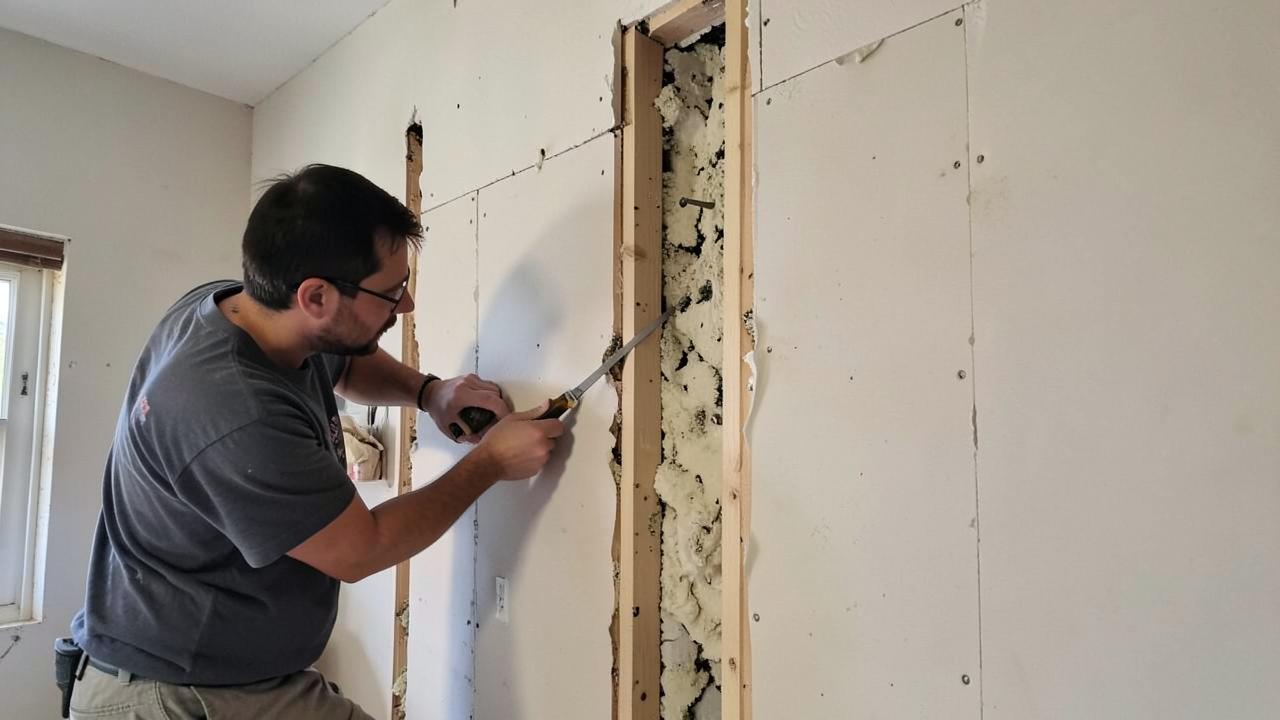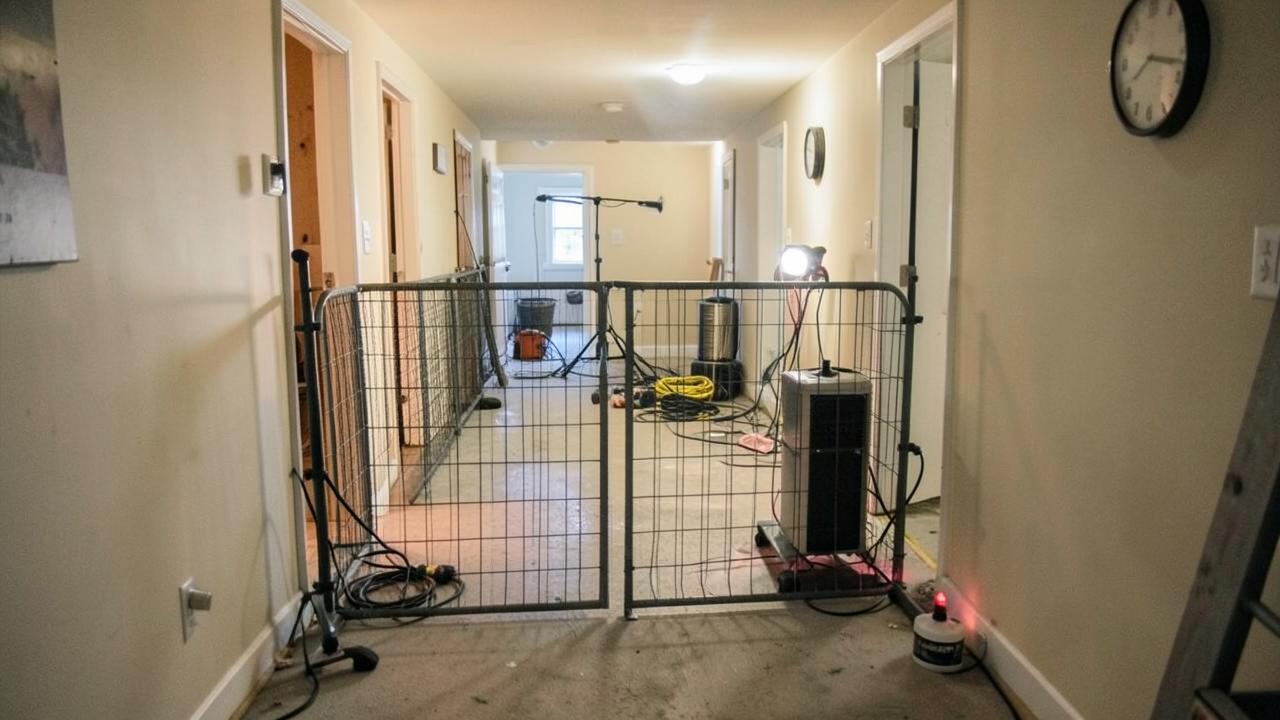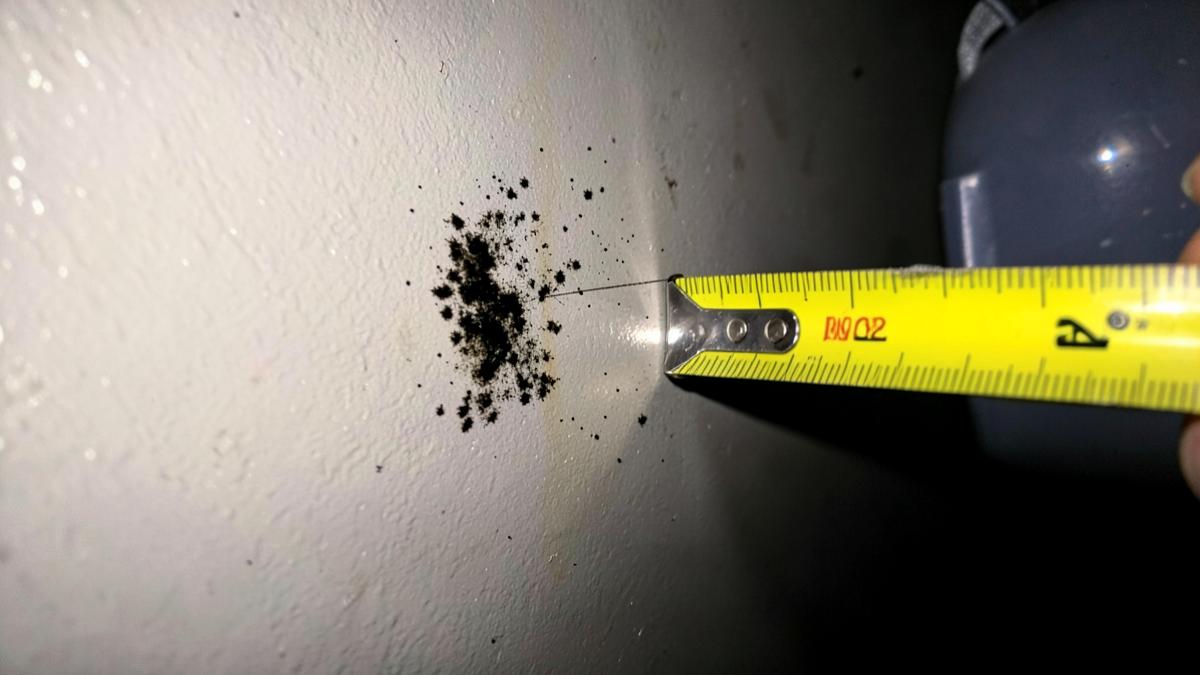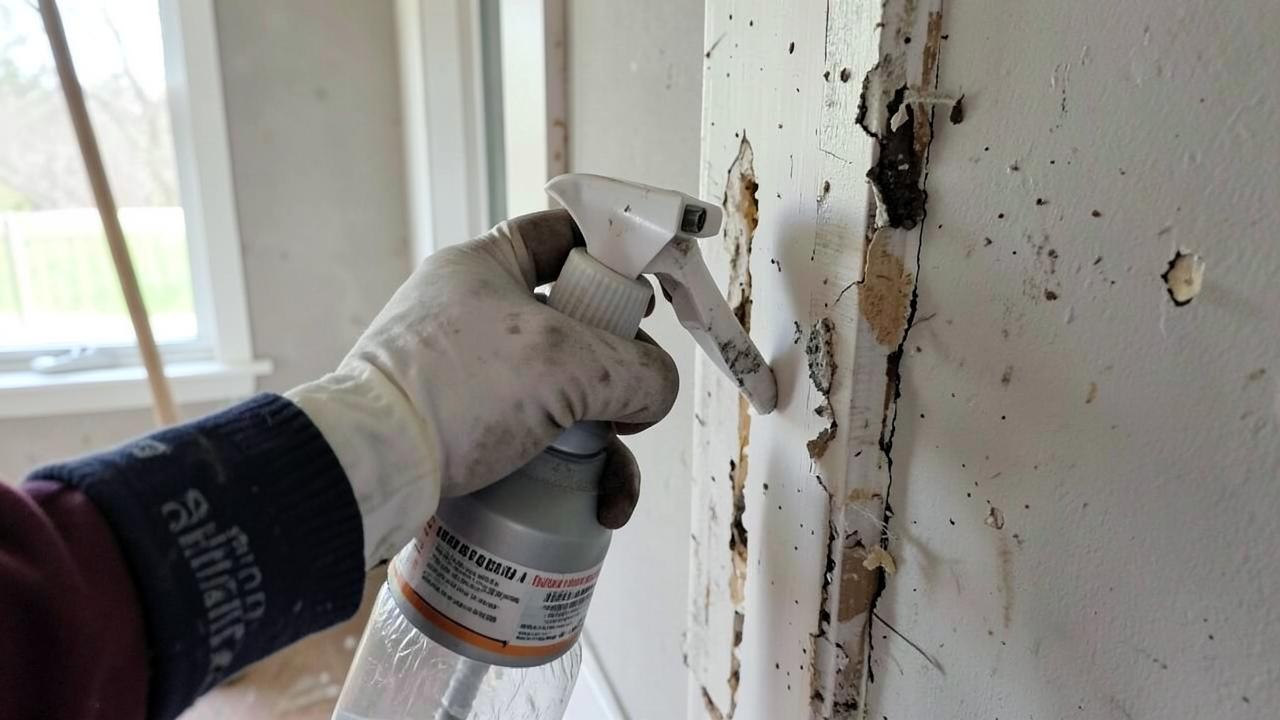
Almost every mold call starts with the same question: can you just spray it? The short answer from anyone who does this work for a living is no — spraying changes the colour of a problem, not the amount of contamination in the building. The ANSI/IICRC S520 is built around physical removal, and understanding why saves homeowners from paying twice.
Does killing mold remove it?
No. Killing mold and removing mold are two different outcomes, and only one of them makes a building clean. A biocide can render growth non-viable, but the dead fungal material — hyphae, spore fragments, the proteins that people react to — is still sitting on the surface where it grew.
This is the single most useful thing a homeowner can learn about mold work. The health and odour complaints that bring people to a remediation contractor are driven by material being present, not by whether that material is alive. That is why the standard's goal is a return to Condition 1 — normal fungal ecology for that building — rather than a sterile surface.
What does spraying bleach on mold actually do?
On a hard, non-porous surface, bleach removes staining and can knock down surface growth. On drywall, framing, insulation or carpet backing — the porous and semi-porous materials that hold most of the growth in a house — it wets the material, bleaches the visible discolouration, and leaves the fungal material behind in the pores.
Worse, it adds water to a substrate that already has a moisture problem. The homeowner sees a clean wall for a few weeks, the growth returns in the same spot, and by then the material has taken a second round of wetting. If you are trying to work out whether your situation is a wipe-down or a project, start with how much mold is too much.
What does the S520 say about antimicrobials?
The standard treats source removal as the primary method and positions antimicrobial products as something applied at the operator's discretion, not as a substitute for removal and cleaning. Nothing in professional mold remediation depends on a chemical doing the work that HEPA vacuuming, damp wiping and demolition are supposed to do.
Our S520 overview walks through the structure of the standard — the Conditions, the principles of remediation, engineering controls and verification — at the level the exam and the field both use. The pattern is consistent throughout: control the moisture, contain the area, physically remove the contamination, clean what remains, verify the result.
Where do antimicrobials legitimately fit on a mold job?
They fit after removal, on surfaces that have already been cleaned, and only where a product is registered for that use. A technician might apply an EPA-registered product to cleaned framing before rebuild, or use one during a Category 3 water loss where bacterial contamination — not mold — is the concern.
Two rules keep this honest. First, any product used has to be applied to the material and in the way its label allows; the EPA's mold guidance is explicit that the label is the law on registered products. Second, applying anything before cleaning is backwards — you are treating a layer of soil, not the substrate underneath it.
Why do "spray and pray" bids come in so cheap?
Because they leave out everything expensive: containment, engineering controls, demolition, disposal, detailed cleaning and independent verification. A fogging-only proposal is priced against an afternoon of labour, and a real remediation scope is priced against a crew, equipment and a week of building access.
If you are comparing bids, the tell is in what is being removed. A scope that describes treating, fogging, sealing or encapsulating without describing what material comes out of the building is not a remediation scope. Run your own numbers on what the work should involve with the mold remediation cost calculator before you judge a bid as expensive — the cheap bid is usually cheap because half the job is missing.
There is a second cost that shows up later. When the growth returns, the same materials get removed anyway, plus whatever the intervening months of moisture did to the framing, plus a second mobilisation. Homeowners rarely regret the containment they paid for; they regularly regret the spray they paid for.
What about encapsulants and sealers after remediation?
Encapsulants have a place on cleaned, structurally sound wood where a small amount of staining remains and the owner wants the surface locked down — commonly in attics and crawlspaces. They are a finish step, not a remediation step, and applying one over material that was never cleaned buries the problem under a film.
A useful question for any contractor proposing a coating: what happens to the material under it? If the answer is "we HEPA vacuum, we damp wipe, we let it dry to the dry standard, then we coat," that is a sequence. If the answer is "the coating handles it," you are back to spray and pray with a better product name.
How do you know the mold is actually gone?
Through post-remediation verification performed by someone who did not do the remediation. A visual inspection, moisture readings that meet the dry standard, and — where the protocol calls for it — sampling, all documented before containment comes down.
This is the step a spraying contractor cannot pass, because verification looks at whether the material is gone rather than whether it is dead. Our clearance walkthrough explains what the independent indoor environmental professional checks, and mold inspector certification covers who is qualified to do it.
What should a homeowner ask before signing?
Ask what is being removed, where the moisture came from, who verifies the result, and what happens if verification fails. Those four answers separate a remediation contractor from a spray truck faster than any credential check.
Credentials still matter — mold work is licensed in several states and the licence usually sets who may remediate and who may assess. Check your state on mold remediation licensing by state, and see mold remediation certification for what the training behind the credential actually covers.
What technicians need to know for the AMRT exam
Exam questions on biocides are usually testing one idea: that source removal is the primary method and chemical application never substitutes for it. If an answer option offers a treatment in place of removal on porous material, it is the distractor.
Know the vocabulary too — antimicrobial, biocide, sanitiser, disinfectant and sterilant are not interchangeable words, and the S520 is careful with them. The AMRT flashcards drill the terminology, and the timed practice exams put it into the scenario format the real test uses. If you are still choosing a path, the AMRT certification guide lays out prerequisites and format.
The short version
Mold is removed, not killed. Fix the water, contain the area, take out what cannot be cleaned, clean what can, dry it, and have someone independent confirm the result. Every product on the truck is there to support that sequence — none of them replace it, and any bid that says otherwise is selling you the same job twice.