The mold that causes the most trouble is the mold nobody can see. Wall cavities are dark, they stay damp long after the surface looks dry, and the paper facing on drywall is exactly the food source growth wants. Here is how it announces itself, how it gets confirmed, and what removal actually involves.
What are the signs of mold behind drywall?
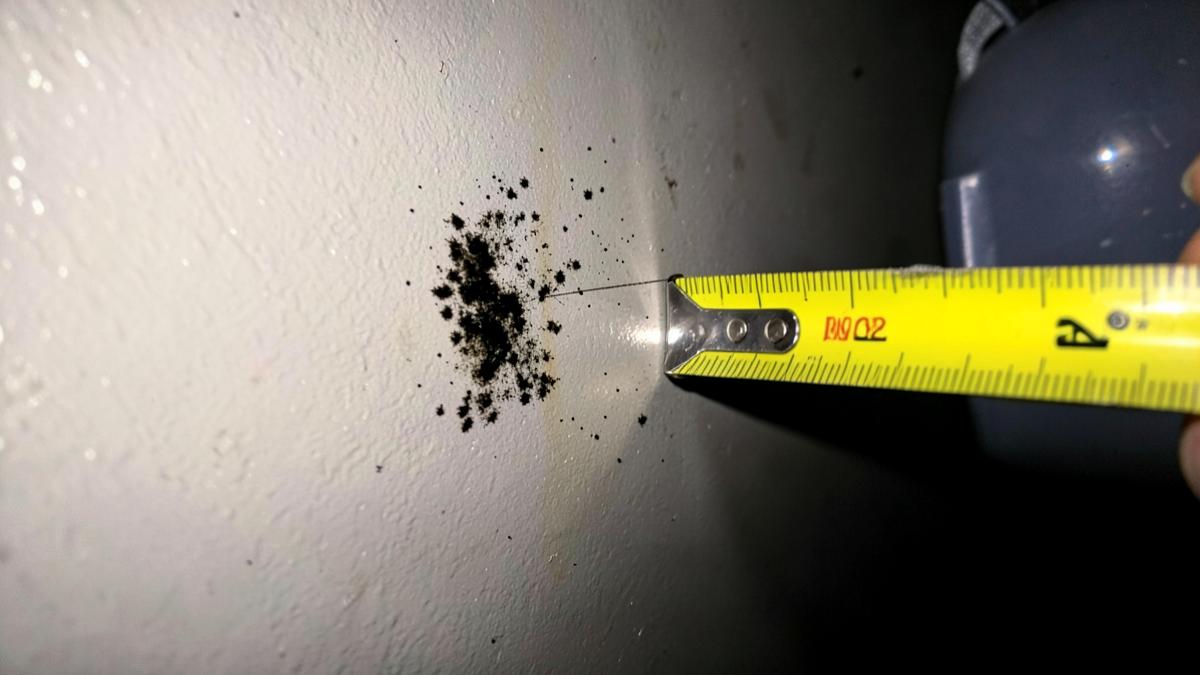
A musty odour with no visible source is the most reliable one, followed by staining that keeps reappearing through paint. Cavity growth almost always shows itself through the wall before anyone opens it.
- Persistent musty smell in one room, strongest low on a wall or near an outlet.
- Bubbling, peeling or crazed paint, or wallpaper lifting at a seam.
- Discolouration that returns after painting — a stain being fed from behind.
- Soft or spongy drywall when pressed, especially under a window or beside a tub.
- Warped baseboard, or trim pulling away from the wall.
- Occupants reacting in one room and not others.
None of these prove growth on their own. Together with a known moisture event — a supply line, a roof leak, a failed window flashing, a slow drain — they are enough to justify opening the wall.
How do you test for mold inside walls without tearing them open?
You look for the moisture rather than the mold. A pin or pinless meter maps how far wetting travelled, an infrared camera finds the temperature anomalies that mark wet material, and a borescope through a small hole lets you see the cavity before you cut it.
Thermal imaging does not see mold — it sees temperature difference, which usually means evaporative cooling from wet material. That is why the camera finds the area and the meter confirms it. Our guide to finding hidden mold goes through the tools and the order to use them in.
Air sampling has a role, but a narrow one. It can support a hypothesis when a cavity is disturbed and the room is sampled, and it belongs to an independent indoor environmental professional rather than to the contractor bidding the removal — see mold inspector certification.
Why can't mold inside a wall be cleaned in place?
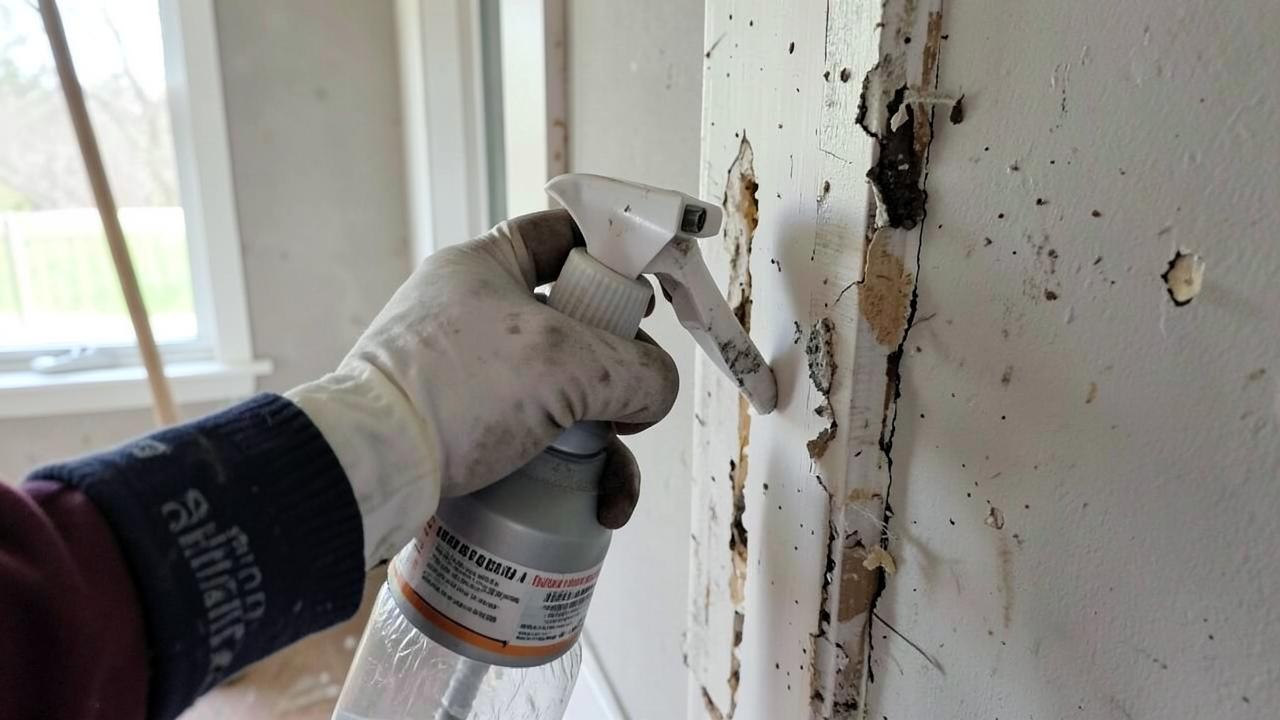
Because you cannot reach it, and because the material it is growing on is porous. Growth on the back of drywall paper and in the face of the insulation is embedded in the substrate, not sitting on top of it, and no spray reaches around a stud bay to a surface nobody can see.
This is where homeowners meet the biocide question, and the answer is the same as everywhere else in the standard: dead material is still material. Why you can't just spray mold explains what treatments do and do not accomplish, and the S520 overview covers the removal-first principle behind it.
How much wall has to come out?
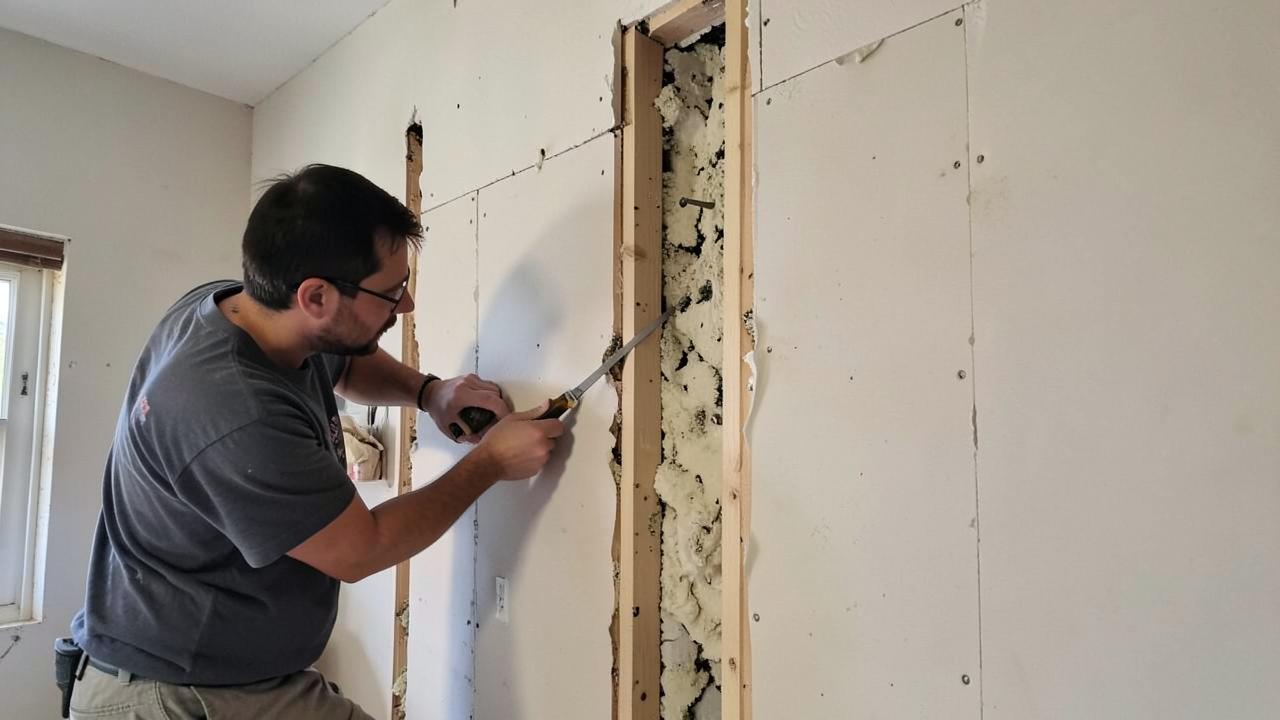
As much as the moisture reached, confirmed with a meter, plus enough to work in — usually removed to the nearest stud so the rebuild has something to fasten to. The affected area is defined by readings, not by how far the stain shows.
On a wall that got wet from below, that often means removing to a set height across the affected bays. On a wall wetted from a pipe in one bay, it can mean one bay. Insulation in any affected cavity comes out — wet fibreglass holds water, sags and does not recover — and the framing behind it is cleaned rather than replaced unless it has lost integrity.
What does removal actually look like?
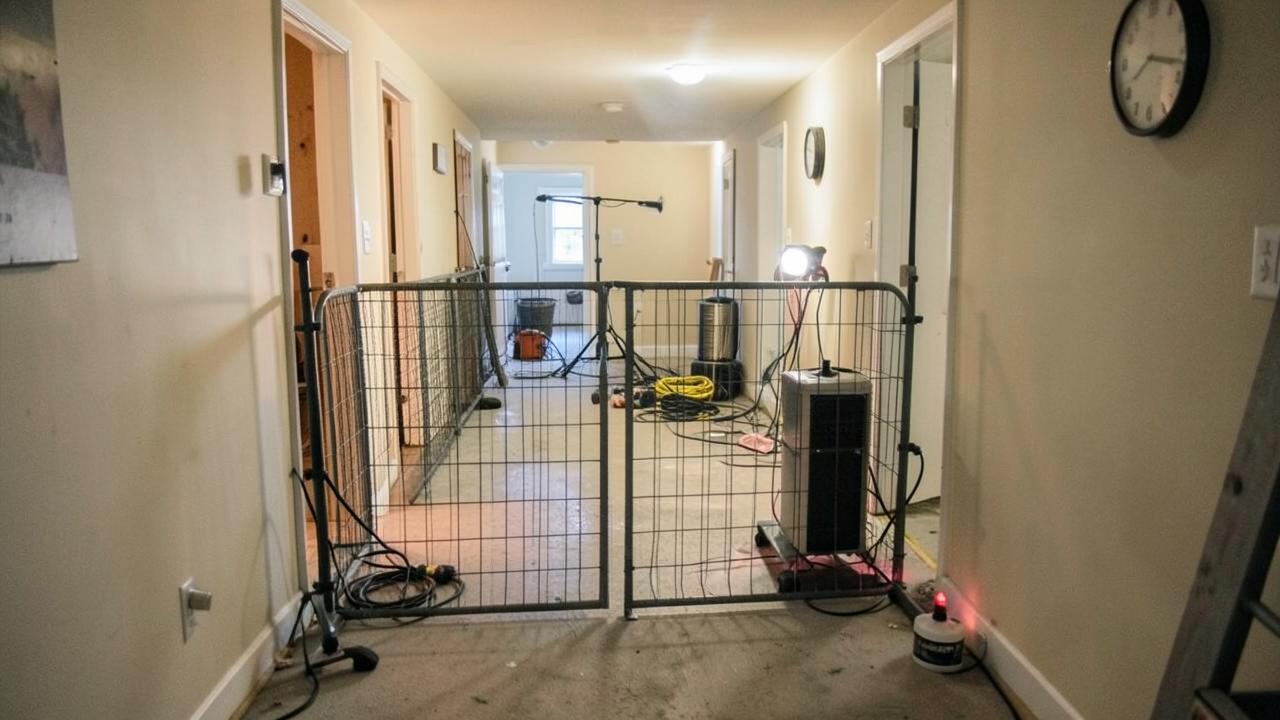
Containment first, then controlled demolition, then cleaning, drying and verification. The sequence is the same one every mold job uses; the only wall-specific part is how carefully the cavity is opened.
- Contain the room and put it under negative pressure with HEPA filtration, sized with the ACH calculator.
- Shut down and seal the HVAC serving the space.
- Score and remove drywall in manageable sections rather than smashing it — the demolition method decides how much material goes airborne.
- Bag debris inside containment and take it out along a defined path.
- HEPA vacuum and damp wipe framing, then let the assembly dry to the dry standard.
- Detail clean the room, including horizontal surfaces well outside the immediate work zone.
The printable remediation checklist follows this order step by step, and the scope of work template is what puts it on paper before the crew starts.
What about the pipe, the window or the roof that caused it?
It gets fixed before the wall closes, and by someone qualified to fix it. Remediation contractors are not plumbers or roofers, and a scope that does not say who is correcting the water source has a hole in it.
Sequence matters here in a way homeowners do not expect: opening the wall is often the first time anyone can see the leak properly, so the repair sometimes gets scheduled mid-project. Build that into the timeline rather than treating it as a delay — see what sets the remediation timeline.
How is a wall verified clean before it is closed?
By an independent post-remediation verification while the cavity is still open. Once drywall goes back up, nobody can confirm anything, and a failed verification after rebuild means removing the new wall.
Verification looks at three things: a visual inspection showing no remaining growth or debris, moisture readings meeting the dry standard, and any sampling the protocol required. Our clearance walkthrough explains what the IEP checks and what happens when a job does not pass on the first walk.
What does opening a wall cost?
It depends on affected area, how much material comes out, the containment the room needs, and whether rebuild is in the same contract. Those factors — not a per-wall price — are what a real estimate is built from.
Model your own scope with the mold remediation cost calculator so you can read a proposal against something. And check whether the work is licensed where you live before you hire: mold remediation licensing by state lists the states that regulate it and the agency to confirm with.
What technicians should take from cavity work
Cavity jobs are where scoping discipline shows. Meter the wall, define the affected area from the readings, contain before you open anything, and never let the demolition method create the cross-contamination the containment was built to prevent.
On the exam, wall-cavity scenarios usually test whether you contain before investigating and whether you classify by material condition rather than by visible area. Drill them in the timed practice exams, keep the terminology current with the AMRT flashcards, and see mold remediation certification for the training path.