"Ten square feet" is the most quoted number in the mold trade and one of the most misused. This post explains where it comes from, what it does and does not mean, and how remediators, customers and licensing agencies each use a size threshold differently.
Where does the 10 square foot rule come from?
It comes from EPA guidance for schools and commercial buildings, which organises its remediation guidelines by the size of the affected area and treats areas of roughly ten square feet or less as small isolated jobs that in-house maintenance staff can commonly handle with appropriate precautions — see Mold Remediation in Schools and Commercial Buildings and its remediation guidelines table.
Two things follow from that immediately. It is guidance, not a law, and it was written for a specific audience — building maintenance in schools and commercial properties — not as a universal trigger for professional remediation. Read the source before you quote it to a customer.
Is 10 square feet a legal threshold?
Not federally. There is no federal law that makes ten square feet the point at which a licensed contractor is required; what exists is EPA guidance plus a patchwork of state rules, and some states set their own size or dollar thresholds that determine when licensing applies.
That is where the confusion comes from: people hear a number in training, then assume it is the rule everywhere. Check what your state actually says on mold remediation licensing by state, which links each agency's own page — including Texas and Florida. Licensing rules change; confirm current requirements with the agency that issues the licence.
Does the S520 use a square footage trigger?
The ANSI/IICRC S520 works from Condition, contamination and the circumstances of the job rather than from a single area threshold. A remediator classifies each area, scopes it, and sizes controls to the work and the building's occupants.
That is a more useful way to think, because area alone tells you almost nothing about risk. Read Condition 1, 2 and 3 explained for the classification and the S520 overview for how the standard structures the decision.
What matters more than square footage?
Occupancy, the moisture source, what the material is, and where the contamination can travel. A two-square-foot colony in a return plenum feeding an occupied building is a bigger problem than twenty square feet on a detached garage wall.
- Who is in the building. Occupied homes, schools, healthcare and anyone with health sensitivities change the answer immediately.
- Is the source still active? Growth with running water behind it will not stay small.
- Hidden extent. Visible area is often the smaller half — finding hidden mold.
- HVAC involvement. A system that ran through the area distributes it building-wide — HVAC contamination.
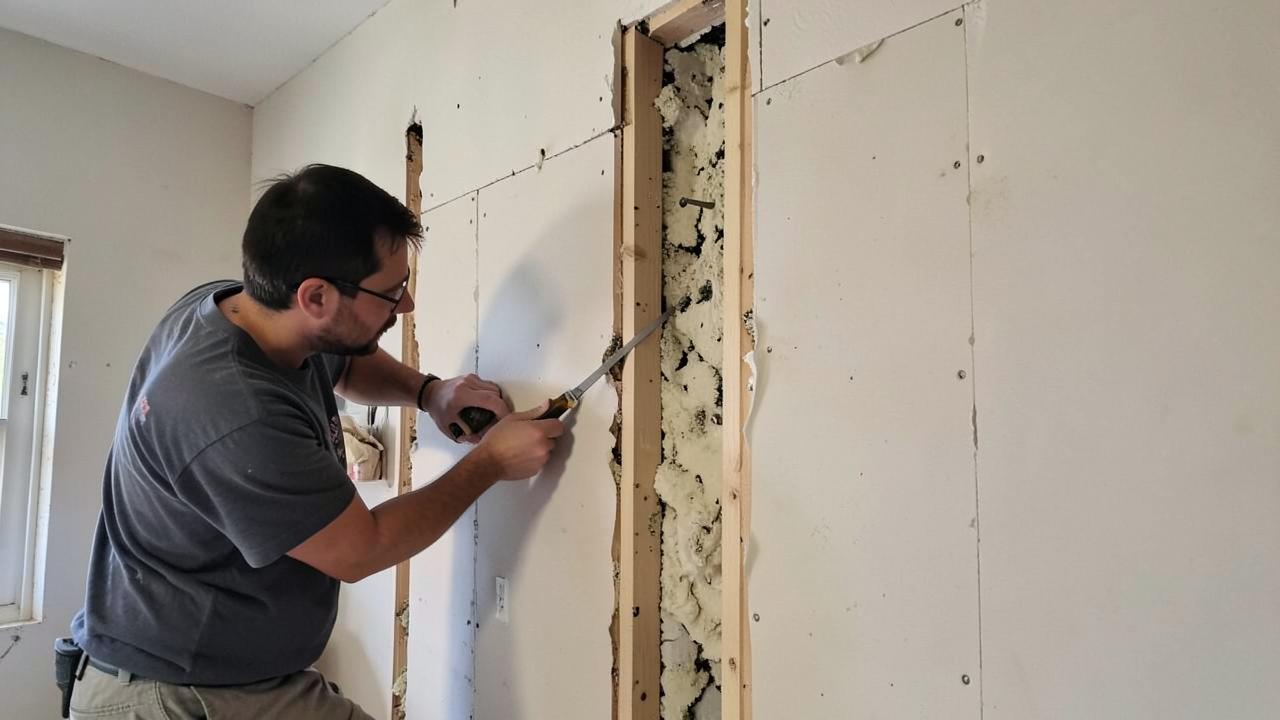
- Material and method. Cutting out colonised drywall aerosolises far more than wiping a hard surface, which drives PPE and containment.
- Insurance and liability. A documented professional scope protects everyone once money is involved.
When should a homeowner call a professional?
When the area is beyond a small isolated patch, when the source is unknown or still active, when the HVAC may be involved, or when anyone in the household is health-sensitive. Also when they simply do not want to open a wall and find out what is behind it — which is a legitimate reason.
Be straight with people about the small stuff too. A palm-sized spot of surface growth on bathroom tile grout, with the fan finally working, is a cleaning task. Telling a customer otherwise is how the trade earns its reputation for scaremongering.
How does size affect what a job costs?
Area drives the removal and cleaning line items, but the fixed costs — mobilisation, containment setup, equipment, verification — do not scale down past a floor. That is why a small mold job rarely feels cheap relative to its square footage.
Run the numbers yourself with the mold remediation cost calculator: it separates per-square-foot work from the setup costs so a customer can see why a ten-square-foot bathroom job and a hundred-square-foot basement job are not ten times apart. Then write it up properly with the scope of work template and size the filtration with the ACH calculator.
How should you talk about the number with customers?
Use it as an orientation point, not as a verdict: "guidance for commercial buildings treats areas around ten square feet as small and isolated, but here is what actually drives the decision on your property." Then walk them through occupancy, source and hidden extent.
Document what you found and why you recommended what you recommended — the documentation post covers the file, and the remediation checklist keeps the job in order once they say yes.
How does this show up on the AMRT exam?
As judgement questions, not arithmetic. Expect scenarios where the described area is small but the circumstances are not, and the correct answer is the one that accounts for occupancy, source and contamination pathway rather than the one that measures the patch.
Practise on the timed practice exams, drill the underlying framework on the AMRT flashcards, and see the AMRT certification guide for how the exam is structured.
Do state thresholds use square footage too?
Some do and some use project value or the type of work instead — which is exactly why "ten square feet" cannot be treated as a national rule. The threshold that matters legally is whichever one your state's agency publishes, and some states set exemptions below a stated size or dollar amount.
We summarise what each state does, with links to the issuing agency, on mold remediation licensing by state. Read the agency page before you rely on any threshold, including ours — licensing rules change, and the penalty for guessing wrong falls on the contractor, not on the website they read it on.
Does the size change how you build the containment?
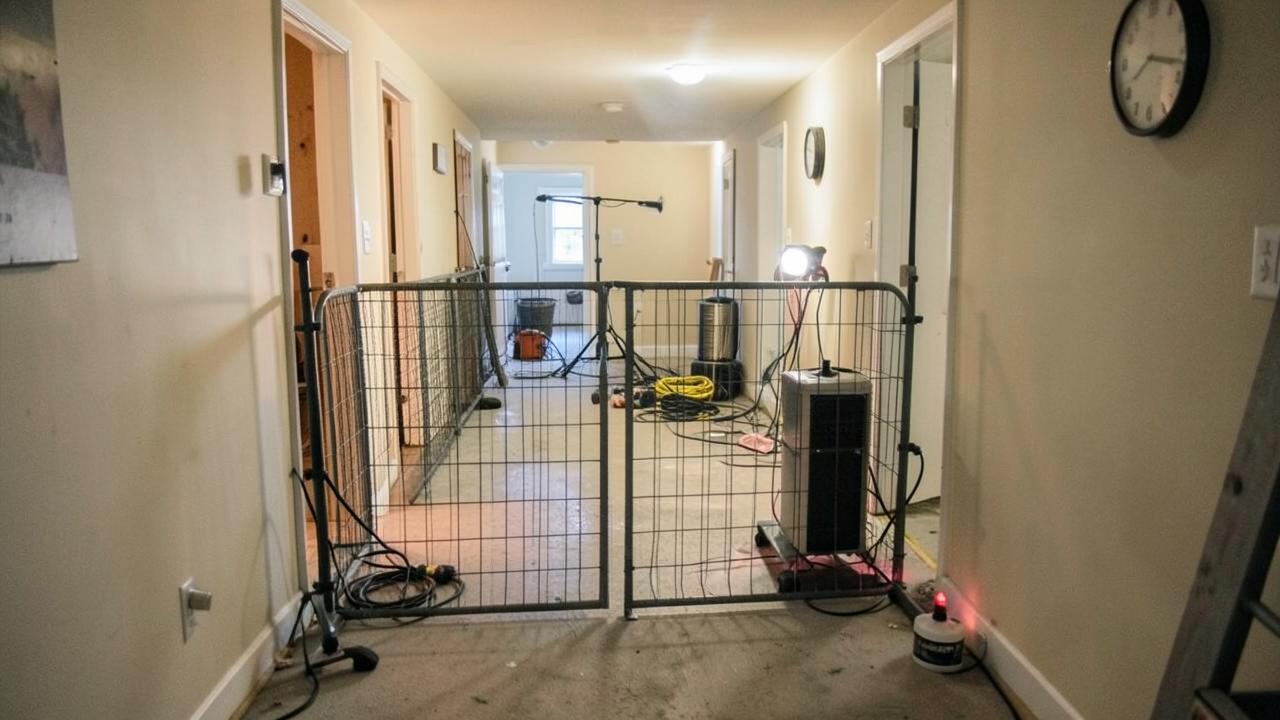
It changes the containment type more than the principles behind it. A genuinely small isolated patch may justify local containment and a single machine; a large or occupant-sensitive area pushes you toward full containment with a decon chamber and verified pressure differential.
What does not change with size is the logic: isolate the work area, keep it under negative pressure relative to the occupied space, filter and exhaust appropriately, and control the pathway in and out. Read containment types explained, then size the filtration for whatever you build with the air changes per hour calculator.
What should a contractor put in the estimate?
The measured area by room, the material and the action for each, and the fixed costs listed separately from the per-square-foot work. That structure answers the "why does a small job cost that" question before the customer asks it.
Show your reasoning where the area is small but the scope is not. "Two square feet visible, moisture readings elevated across eleven feet of wall base, HVAC return in the affected wall" is an estimate somebody can evaluate. "Mold remediation — lump sum" is an estimate somebody shops against three others they also do not understand.
Build it in the scope of work template, price it in the cost calculator, and hand the customer the measured basis alongside the number. Estimates that show their work close at a higher rate than ones that do not, and they hold up when an adjuster reviews them line by line.
What if the customer only wants the visible patch cleaned?
Price what they asked for honestly, and put the rest in writing as a documented recommendation they declined. You are allowed to do limited work; you are not allowed to imply the building is clear when your own findings say otherwise.
Make the limits explicit in the scope: what was cleaned, what was not investigated, and that no verification of the wider area was performed. That protects the customer's understanding and your licence, and it leaves the door open for the fuller scope when the problem reappears.