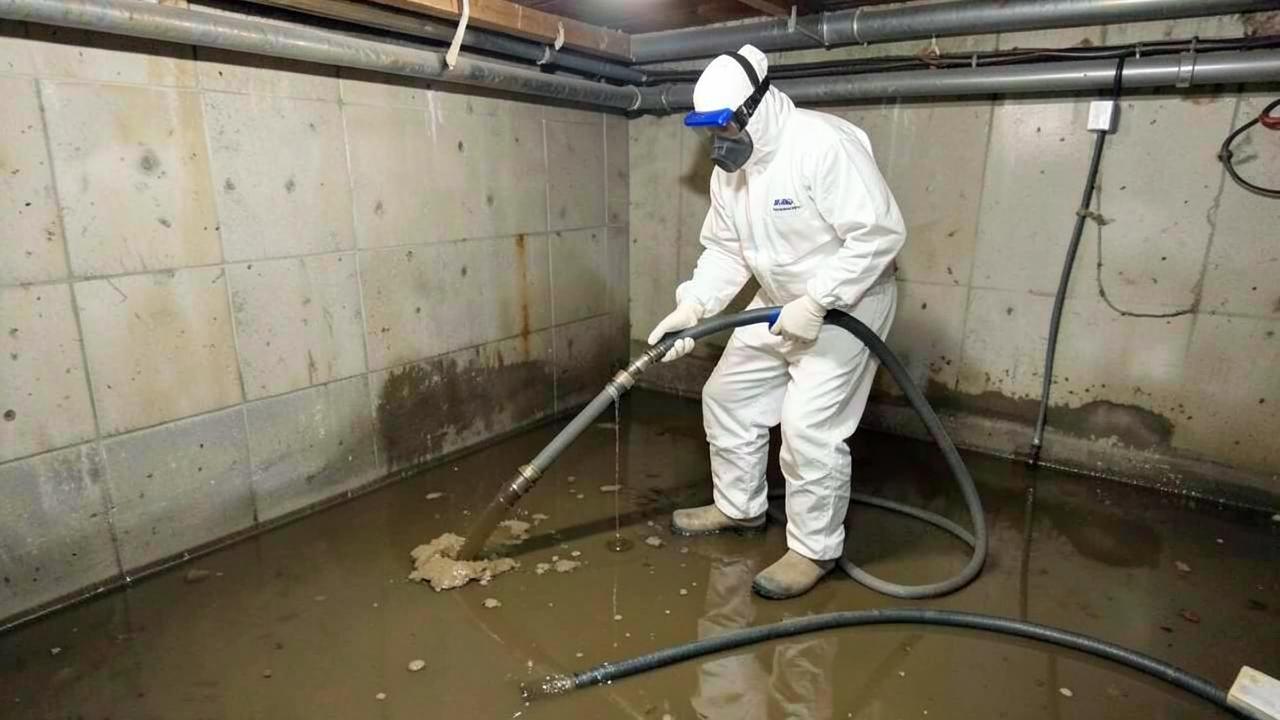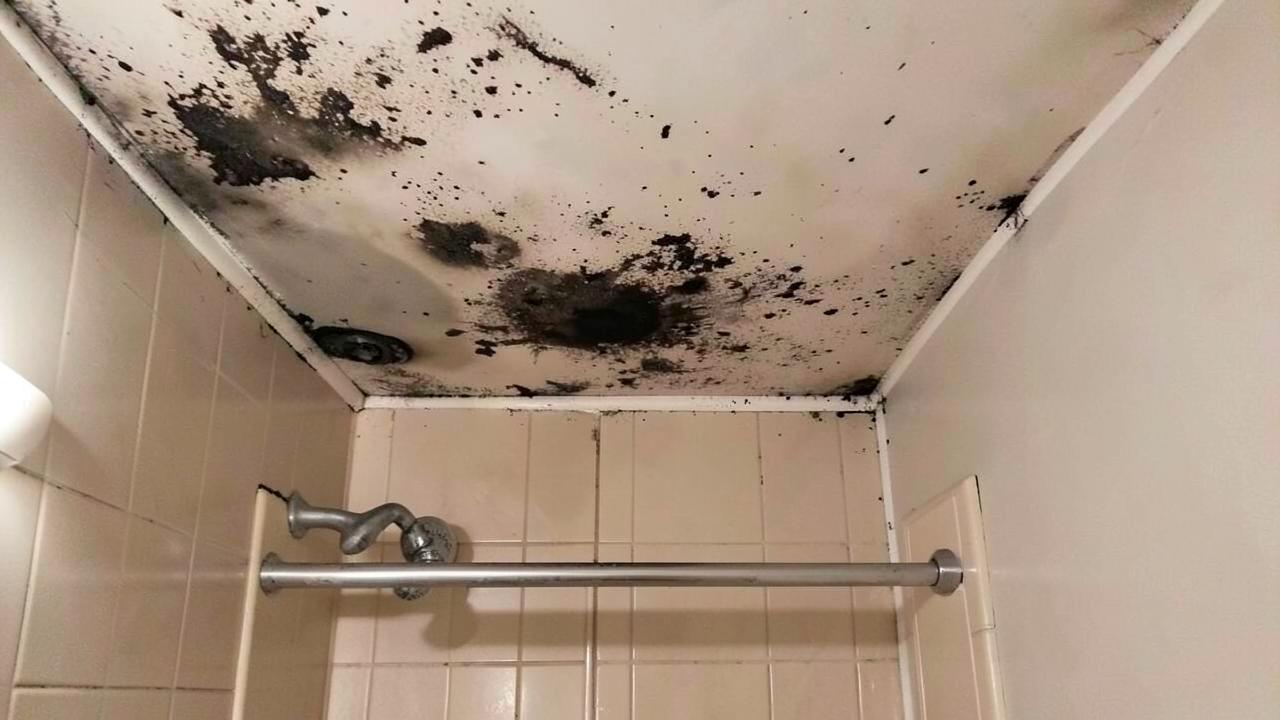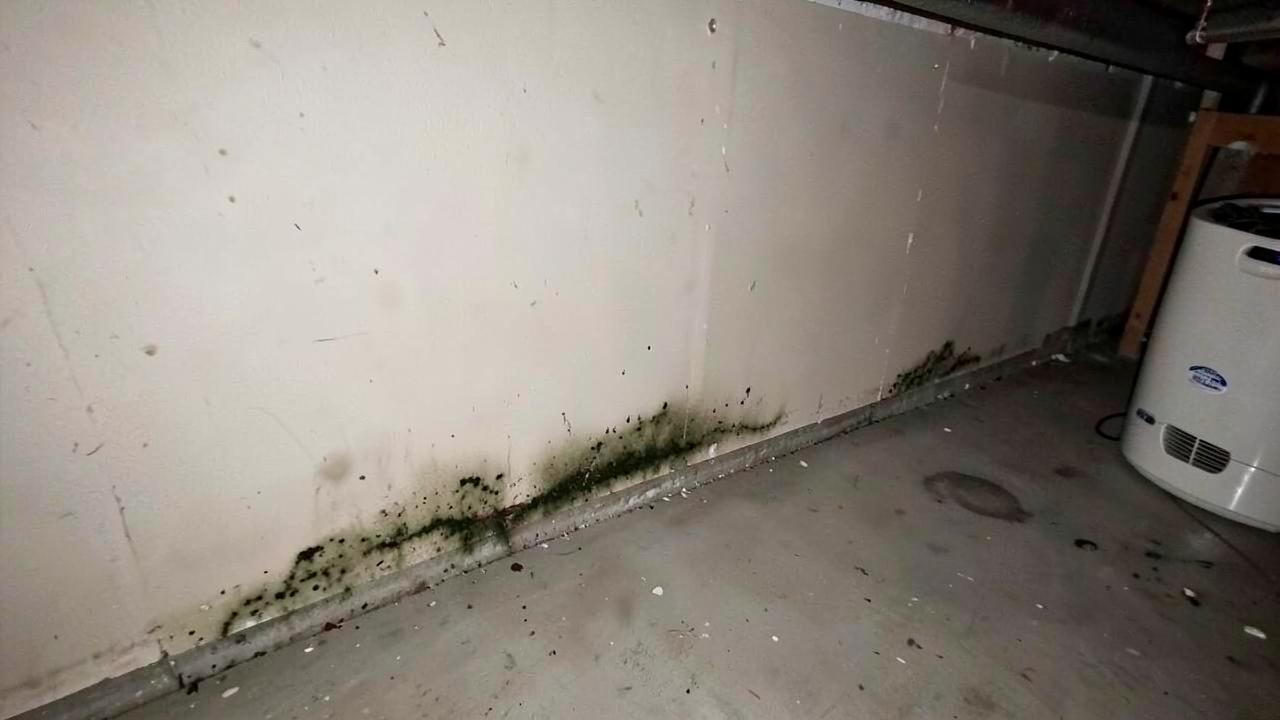
Basements collect every moisture problem a house has. Groundwater comes in from the outside, warm air condenses on cold walls in summer, and any plumbing failure upstairs eventually arrives downstairs. A finished basement adds materials that hold all of it.
Why do basements get mold so often?
Because they are cool, below grade and frequently damp, which is precisely the environment mold needs. The three usual sources are bulk water intrusion, vapour drive through concrete, and summer condensation on cold surfaces.
Each one leaves a different signature. Bulk water shows a line — staining and damage that stops at a height. Vapour drive shows efflorescence and growth spread evenly across the wall. Condensation shows up on the coldest surfaces first: rim joists, ductwork, the outside face of a foundation wall behind furniture. Reading which one you have decides both the remediation and the fix.
What is different about a finished basement?
Finished basements hide the problem and hold the moisture. Framing against foundation walls, insulation in those cavities, drywall to the floor and carpet over concrete are all materials that absorb water and cannot be dried in place once they support growth.
In an unfinished basement, you can usually see the extent, and most surfaces — concrete, block, exposed joists — are cleanable. In a finished one, the visible staining is a symptom, and the scope is set by what the cavity looks like when it opens. That is why an honest estimate on a finished basement is often staged: investigate first, then scope.
What happens to finished walls and carpet?
Wet insulation and drywall in an affected cavity come out. Carpet and pad over concrete that has been wet come out. Framing, concrete and block get cleaned and dried.
- Drywall: removed to a height set by moisture readings, not by a habit — commonly to the next stud bay above the wetting line.
- Insulation: fibreglass batts that got wet are removed; they hold water, sag and lose their function anyway.
- Carpet and pad: pad is a loss in any wetting of consequence; carpet depends on category, exposure time and whether it can be cleaned off-site.
- Baseboard and trim: removed to open the cavity; MDF trim that was wet does not come back.
- Contents: porous stored items in contact with the water are the hardest conversation in a basement, and the one to have before work starts.
How do you contain a basement?
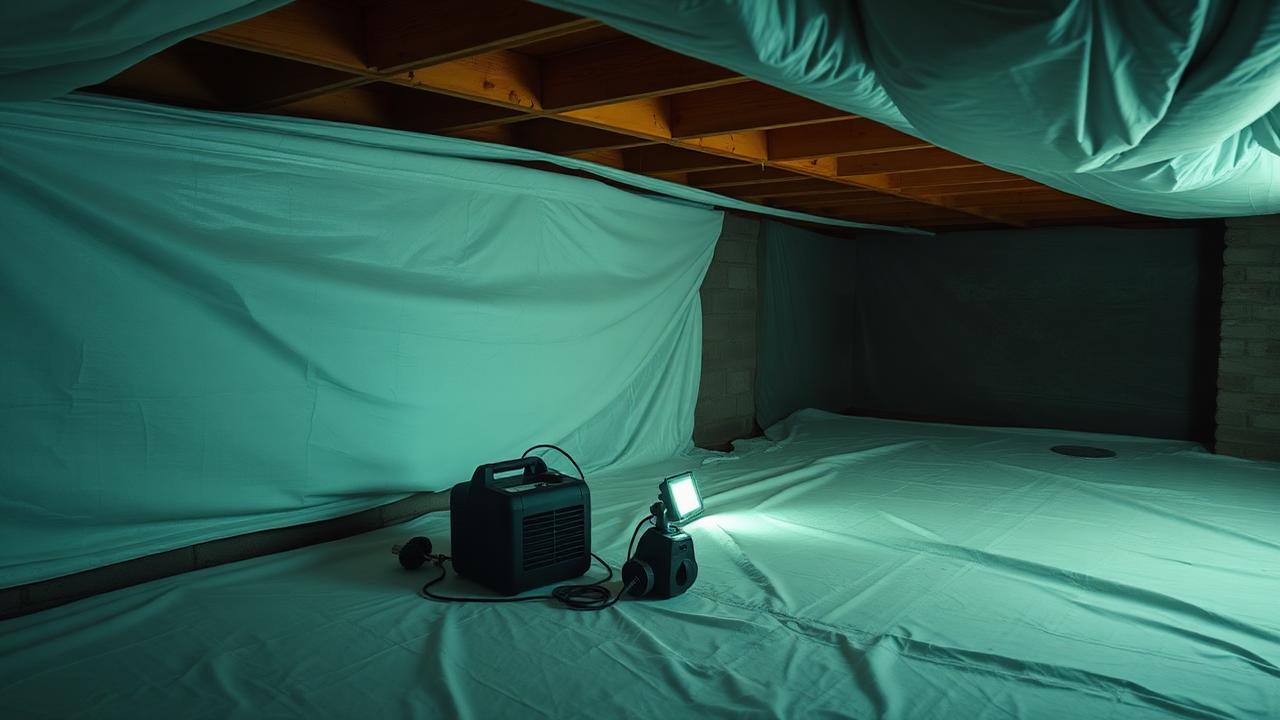
Barrier the work area off from the stairs and the rest of the house, put the space under negative pressure with HEPA filtration, and shut down and seal the HVAC that runs through it. Basements are usually where the air handler lives, which makes that last step the one that matters most.
A basement is also the room most likely to have a stairwell acting as a chimney for anything you disturb. Contain at the top of the stairs as well as at the work area, and keep the pathway to the outside defined. Sizing the equipment starts with volume — run it through the air changes per hour calculator rather than guessing, and see containment types explained for when a full build with a decon chamber is warranted.
What does dehumidification after remediation actually accomplish?
It brings the remaining structure — concrete, block, framing — down to a dry standard so the rebuild does not trap moisture, and then it holds the space at a humidity that will not support new growth. Those are two separate jobs: the drying phase and the long-term control.
The drying phase is water restoration work, and the sizing and psychrometry behind it live on our sister site WRTTraining.com. The long-term half is a homeowner decision: a permanent dehumidifier sized for the space, or a conditioned-basement approach, plus the exterior work that keeps bulk water out in the first place.
What has to be fixed outside for the repair to hold?
Grading that moves water away from the foundation, gutters and downspouts that discharge well clear of the wall, and any failed drainage or sump arrangement. Remediation without that work is a scheduled repeat.
Interior fixes have their place — a drain tile system, a vapour barrier over the slab, sealed rim joists — but the cheapest water to deal with is the water that never reaches the wall. Any contractor scoping a basement should walk the exterior before they price the interior, and their report should say what they found there.
What should a basement mold estimate include?
Investigation, containment and engineering controls, removal by area and material, cleaning, drying, verification, and rebuild priced separately — plus an explicit statement about who is fixing the water source.
Basements are the job type where scopes vary most between contractors, which makes an independent reference point valuable. Price the scope yourself with the mold remediation cost calculator, then compare bids line by line. A written scope is the other half of that — see the scope of work template.
Is basement mold work licensed?
In some states, yes — mold remediation is a licensed activity, often with a separate licence for the assessor who writes the protocol and verifies the result. Check your state on mold remediation licensing by state and confirm current requirements with the agency named there.
Where it is not licensed, training is the only signal a homeowner has. Mold remediation certification explains what the credentials cover, and the S520 overview describes the standard the work should follow.
What should a homeowner do before the crew arrives?
Get the water stopped if you can, move undamaged stored items out of the affected area, and stop running the HVAC through the basement. Those three actions make the scope smaller and the containment easier before anyone charges you an hour.
Photograph everything first, including the stored contents, and write down when you noticed the problem and what the weather or plumbing was doing at the time. That timeline matters to an insurer and to the contractor trying to work out whether they are chasing groundwater, condensation or a supply line. Do not run a household dehumidifier in a room with visible growth and assume it is handling anything — it lowers humidity and does nothing about material that is already colonised.
What technicians should take from basement jobs
Basements test scoping discipline more than technique. The materials are ordinary; the difficulty is deciding how far the wetting travelled, what the source is, and how to contain a space that connects to the whole house through a stairwell and an air handler.
Those are exam scenarios almost word for word. Work them under time in the practice exams, keep the vocabulary sharp with the flashcards, and read the AMRT certification guide if you are deciding when to sit the exam.